Business Informatics · Costa Rica

Hey there,I'm Alejandro Arias.

I build backend-heavy business systems that companies actually run day to day — ERPs, POS platforms, scheduling and academic-management software. Two of the systems below were sold as freelance work and are live in production right now.

Open to full-time rolesAvailable for freelance / contract work
 |

Focus

Backend

Building

ERPs & POS

Learning

Cloud

JavaPythonDjangoReactAWSAzure

Real Systems, Real Problems

Software I've built beyond classroom exercises.

The systems below run real operations — inventory that has to reconcile, appointments that can't double-book, cash drawers that have to close clean, records that have to survive an audit.

Main Project · Offline-First ERP

Freelance · Paid Client Project

LICS — ERP for Laboratorio de Inyección Castro Solís

LICS deployment architecture: Electron desktop app, Nginx, Next.js and Django REST Framework, PostgreSQL

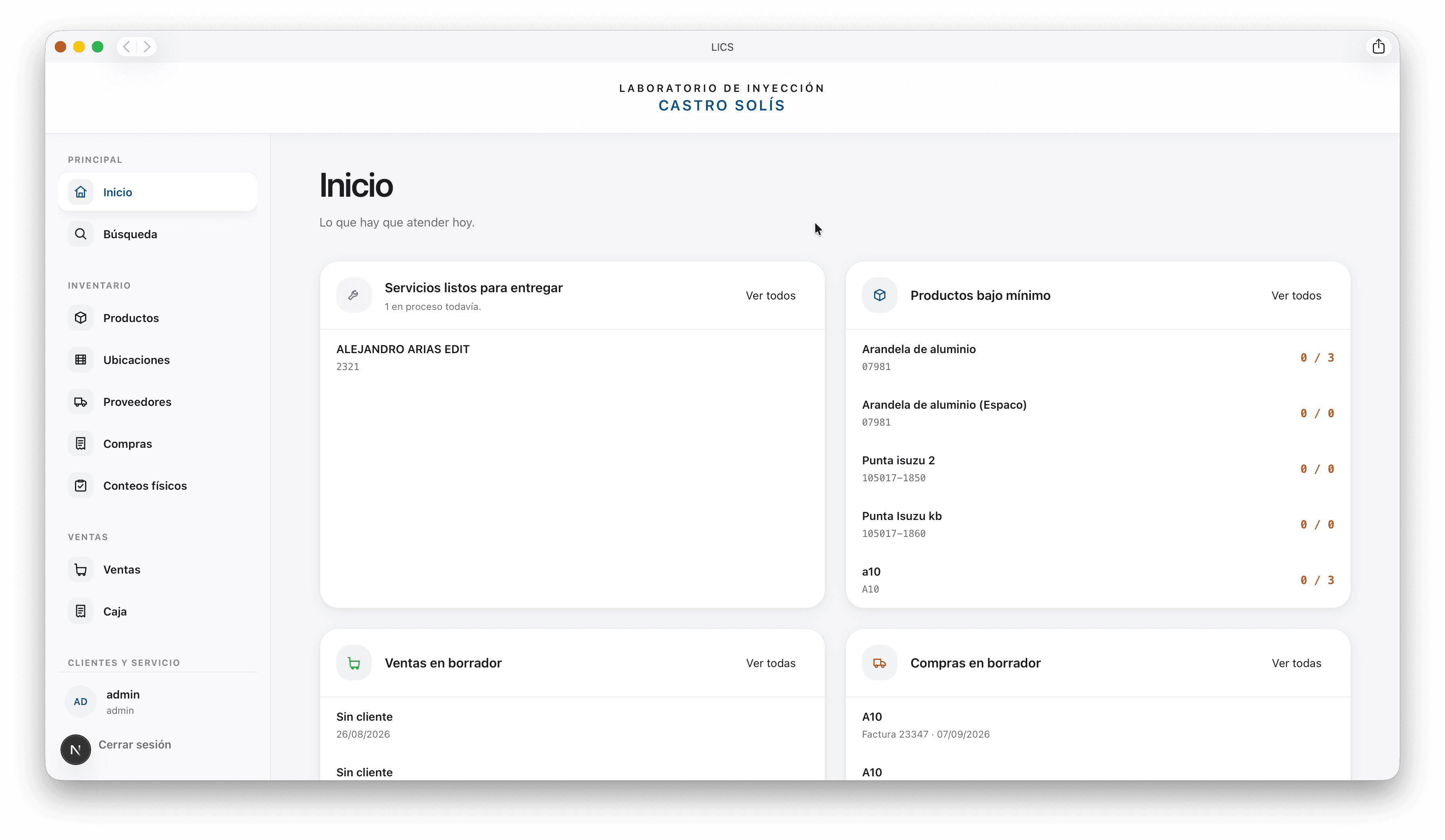
Offline-first enterprise resource planning system for a real diesel and gasoline fuel-injector laboratory: inventory, purchasing, import costing, sales, customers, injector service tracking, physical counts and reporting. Packaged as a native Windows desktop app so the business can run with zero dependency on internet access. Commissioned as a freelance engagement and now running the lab's actual day-to-day operations, replacing a legacy DBF system with zero prior IT infrastructure.

Django REST FrameworkPostgreSQLNext.jsDockerElectronNginx

Domain

Offline ERP

Scope

Desktop + Full Stack

Reliability

372 Tests · Backups

Jewelry Management Platform — Cuero&Perla

Freelance · Retail POS & E-Commerce

Jewelry Management Platform — Cuero&Perla

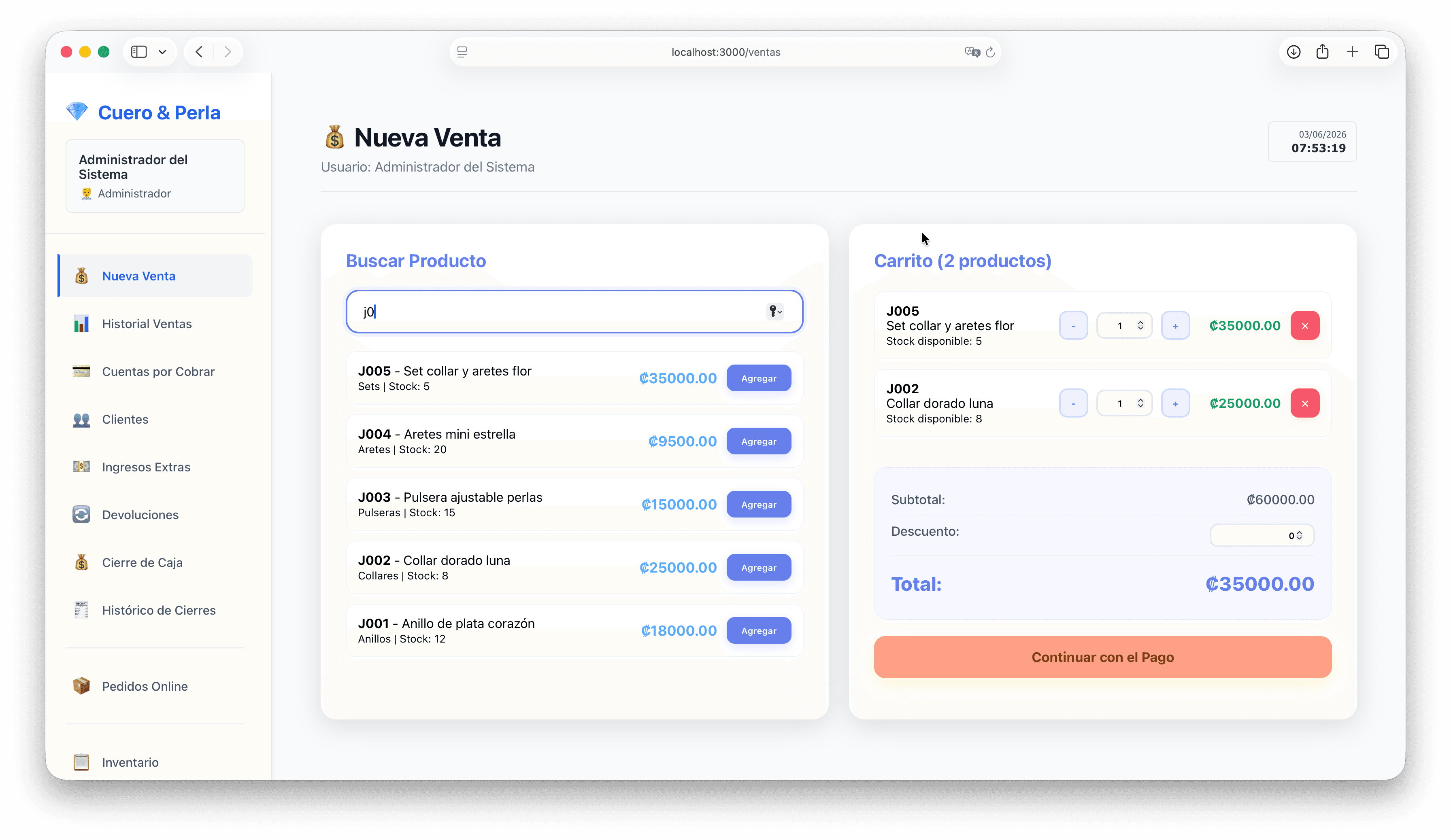
Commissioned freelance system for a real Costa Rican jewelry retailer: point of sale, inventory, storefront, checkout and online orders. Sold and in daily production use for 9+ months.

Node.jsExpressReactNext.jsSupabaseAWS
EsteticaPro — Appointment Management SaaS

SaaS Appointment Platform

EsteticaPro — Appointment Management SaaS

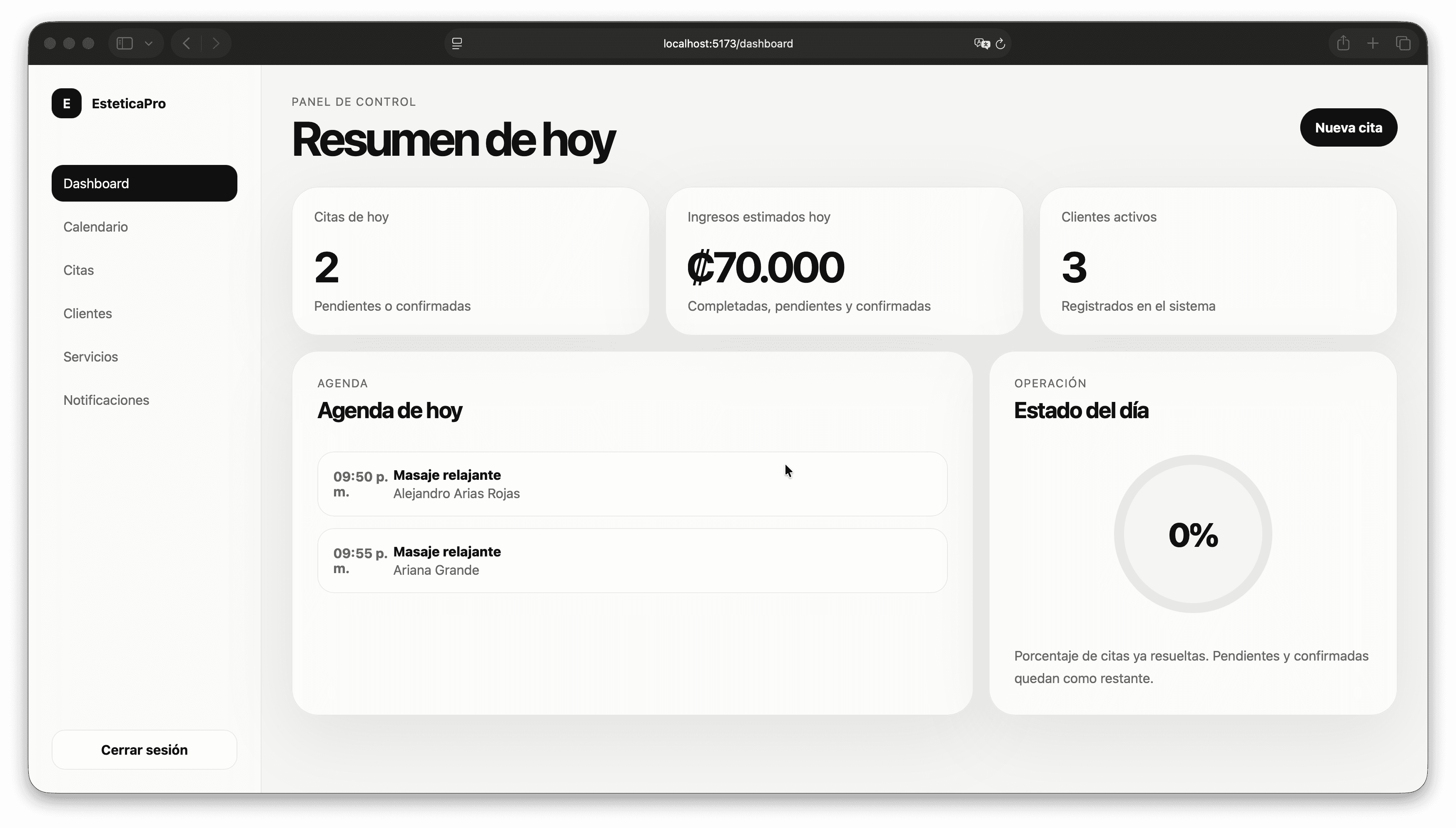
API-first scheduling platform for beauty salons with role-based access, conflict-free booking and Celery/Redis reminder workflows.

DjangoDRFReactTypeScriptRedisCelery
NexoAcadémico

Academic Management Platform

NexoAcadémico

Full-stack platform for university course management: enrollment, assignments, submissions and grading with role-based workflows.

Next.jsReactTypeScriptDjangoMySQL

Case Studies

How each system was designed.

Problem, process, solution — the same breakdown engineering teams use in interviews. LICS and the jewelry platform were sold as paid freelance work to real companies; all four run real domain logic, not CRUD scaffolding.

Offline-First ERP

Freelance · Paid Client Project

LICS — Laboratorio de Inyección Castro Solís

LICS login screen

Login

LICS main dashboard

Dashboard

LICS inventory module with stock movement history

Inventory & movement history

LICS sale creation and confirmation screen

Sale creation

LICS purchase import cost calculation

Import cost calculation

LICS injector service tracking

Service tracking

LICS generated report

Reports

LICS printed barcode label

Barcode labels

01 · Problem

Laboratorio de Inyección Castro Solís, a real diesel and gasoline fuel-injector lab, was running on a legacy FoxPro/DBF system — tables named INVEN01 through INVEN08 — with no dedicated IT staff and unreliable internet. They hired me directly, as freelance work, to replace it with something a non-technical operator could run fully offline, trust for audit purposes, and restore themselves if something broke.

02 · Process

  • Movement-sourced inventory. Stock is never stored as a column — it's always derived from an append-only movement history. Cancelling a sale doesn't delete or edit a record; it creates a linked reversal movement, so the audit trail is permanent.
  • Concurrency-safe by design. Every confirm/cancel operation row-locks with select_for_update() inside an atomic transaction and re-validates the state machine before touching stock — no race conditions on double-confirm or double-cancel.
  • Backups that prove themselves. A dump → restore-and-validate → checksum pipeline discards any backup that fails a step. The rule the system enforces: a backup only counts once it has been restored and verified, not just written to disk.
  • Shipped on real Windows hardware. Packaged with WSL2 and a real Docker Engine inside an Electron shell. Debugging this in production surfaced an intermittent failure where WSL2 silently powered off the whole distro — traced through system logs to a missing keep-alive process, fixed, then hardened again after a recurrence.
  • A real legacy migration, not a data dump. DBF records move through staging, validation, normalization, import and stock reconciliation, tracked in dedicated migration-audit tables so legacy identifiers never leak into the production schema.

03 · Solution

Django 5.2 + DRF on PostgreSQL 17, split into service and selector layers per domain (inventory, sales, purchasing, service tracking). 372+ automated backend tests, 16+ internal docs covering architecture, security and disaster recovery, and real barcode label printing. It's the lab's day-to-day system today — a paid deliverable running their actual operations offline, not a demo.

Retail Operations

Freelance · Paid Client Project

Jewelry Management Platform — Cuero&Perla

Joyería point-of-sale screen

Point of sale

Joyería public storefront home page

Public storefront

Joyería storefront product page

Product page

Joyería storefront checkout flow

Checkout

01 · Problem

Cuero&Perla, a jewelry retailer in Grecia, Costa Rica, needed to run in-store sales, credit sales to regular customers and a public online catalog off of what was effectively paper receipts and a notebook of IOUs. They commissioned this as paid freelance work — I designed, built and still maintain it.

02 · Process

  • Mixed-payment reconciliation. A single sale can split across cash, card and transfer — the backend tracks each amount separately and reconciles all three tender types plus credit payments and misc income into one daily total.
  • Two-phase cash closing. Sales land in a same-day staging table first; closing the register atomically migrates only the cash sales into the permanent ledger, locks the day's credit payments, and writes an immutable closing snapshot — a real point-of-no-return, the way a physical cash drawer closes.
  • Accounts receivable that doesn't conflate a payment with a return. A real payment and a credit-note return touch the balance differently, so they're kept as separate, audited operations instead of one generic "reduce balance" function.
  • Composite products with cycle protection. Jewelry "sets" compute availability as the minimum ratio across their components and run a recursive check so a set can never reference itself through another set.
  • Thermal receipt printing over WebUSB. Talks directly to the store's receipt printer with raw ESC/POS byte sequences, falling back to browser printing when WebUSB isn't available.

03 · Solution

19 backend models, cookie-session auth with role-based permissions, Cloudinary images, transactional email and web push, Excel exports. Separate unit, integration and performance test suites. 810 commits over 9 months, deployed on Railway and Vercel — sold, shipped and in daily use, not a portfolio demo.

Scheduling Systems

Independent · Built for Commercialization

EsteticaPro — Appointment Management SaaS

EsteticaPro dashboard

Dashboard

EsteticaPro calendar view

Calendar view

EsteticaPro appointment booking screen

Appointment booking

01 · Problem

Beauty salons scheduling by phone, paper and WhatsApp run into the same three failures every time: double-booked stylists, no-show losses from forgotten reminders, and no single source of truth when more than one person manages the calendar. I designed EsteticaPro as a SaaS-shaped platform from day one, architected so it could be commercialized later.

02 · Process

  • Conflict prevention lives in the model, not a form check. The appointment's end time is computed from the service duration and an overlap query runs on every save, scoped to that stylist — enforced at the model layer, so no code path can create a double-booking.
  • The "available slots" endpoint reuses the same overlap logic. Instead of a separate rules engine, it walks the workday in 30-minute increments and asks the identical conflict query — one source of truth for both blocking and suggesting.
  • A real notification queue, not fire-and-forget. Reminders carry explicit pending/sent/failed states, and a scheduled worker polls every minute to dispatch and retry across email and WhatsApp — durable, not a best-effort background task.
  • Row-level access control. Admins and receptionists see everything; an esthetician's queryset is hard-scoped to their own appointments — permission logic that filters data, not just gates endpoints.
  • WhatsApp behind a swappable service class. Notifications go out through a self-hosted gateway today, isolated behind one interface so switching providers later doesn't touch the scheduling code.

03 · Solution

JWT-authenticated Django REST API with a role-based React/TypeScript frontend, Celery + Redis background processing wired to a live WhatsApp gateway, and a revenue-aware dashboard. The README is candid that WhatsApp Business API approval — not the engineering — is the one blocker left before this could be sold, which matters more to a hiring manager or client than pretending it's already launched.

Academic Platforms

Independent Project

NexoAcadémico

NexoAcadémico dashboard

Dashboard

NexoAcadémico task board

Task board

NexoAcadémico liquid glass shader UI

Liquid glass UI

01 · Problem

University course management fragments across email, spreadsheets and paper — professors juggling deadlines and grading across courses, students losing track of what's due where, and no record of who changed what. I built NexoAcadémico to centralize it with real role-based workflows and an actual audit trail.

02 · Process

  • RBAC enforced at the queryset level, not just the endpoint. Every viewset filters by ownership before returning data — professors only ever see their own courses, students only their enrollments — and mutations re-check permission before writing, so ownership is a write gate, not just a filter.
  • Soft delete with a real history, not framework magic. Deleting a task flips status flags instead of removing the row, and every create, update and delete writes a history record exposed through its own endpoint — "who did what when" is an actual answer, not a guess.
  • Submission and grading modeled with distinct actor rules. A student can create exactly one submission per task; only that course's professor can grade it, and the server — not the client — forces the status to reviewed and stamps the time.
  • A hand-rolled WebGL shader for the UI, not a CSS blur. The "liquid glass" interface effect is a real GLSL fragment shader — signed-distance-field rounding, noise, refraction — registered per component against actual DOM positions.
  • Documented its own rough edges. The database docs flag which stored procedures are stale from an earlier schema — the kind of honesty about technical debt most solo projects don't bother writing down.

03 · Solution

Token-authenticated Django REST API with a full Next.js 16 App Router frontend — courses, enrollment, weighted/graded tasks, file submissions, grading and feedback, plus dashboard and statistics endpoints doing real server-side aggregation. Same engineer designed the data model and built the UI that consumes it, including its own custom animation-token system.

Team Projects

Built with a team, at university.

Every project above is individual work. These are course projects built with classmates — included because the skills are real, labeled because the credit is shared.

SIGAU

Team of 3 · IF-5100 Database Administration

SIGAU

University academic-management database on Azure SQL Server, deployed and hardened on an Azure virtual machine: CIS-benchmark hardening, Row-Level Security, Dynamic Data Masking, auditing and a validated backup/restore strategy — fully documented.

AzureSQL ServerWindows ServerSecurity
View GitHub
Network & Security Infrastructure

Team of 4 · IF5000 Networks

Network & Security Infrastructure

Deployed and hardened a multi-service Linux server: Docker workloads, a Tailscale VPN, Suricata IDS and Fail2ban with a real-time alerting pipeline and Prometheus/Grafana monitoring.

DockerLinuxSuricata IDSPrometheus
View GitHub
TCP/IP Remote Administration

Team · IF4001 Operating Systems

TCP/IP Remote Administration

Client-server remote administration tool in Python using raw TCP sockets, multithreading and a custom GUI for monitoring, screen capture and mouse control.

PythonSocketsThreadingCustomTkinter
View GitHub
Alejandro Arias Rojas

About Me

I like building software that actually gets used.

I build production-grade business systems: an offline-first ERP running 372 automated tests for a real diesel and gasoline fuel-injector lab, a POS and e-commerce platform live for a real jewelry retailer, and SaaS-oriented applications designed to be sold, not just demoed.

My work combines software engineering with business process thinking — I'm finishing a Bachelor's in Business Informatics at Universidad de Costa Rica (2027).

Lately I've been going deeper on Azure: SIGAU, one of my database projects, runs on Azure SQL Server with Row-Level Security and Dynamic Data Masking, and I'm currently preparing for the AI-200 (Azure AI Cloud Developer Associate) certification.

I care about the parts most student projects skip: automated testing, backups that actually restore, and documentation someone else could pick up without asking me first.